
Mesh Concept Explained: How to Beat Man Coverage
The Mesh Concept
Mesh is one of my favorite plays in the Air Raid. Let’s go through a couple coaching points that might help you as you install it.
Before we get started, if you haven’t downloaded the Free Air Raid Playbook, click here to download it now.
The mesh concept is one of the most effective and widely used passing plays in football—and for good reason. If you’re looking for a high-percentage way to beat man coverage and create yards after the catch, mesh should be a foundational part of your offense.
What Is the Mesh Concept?
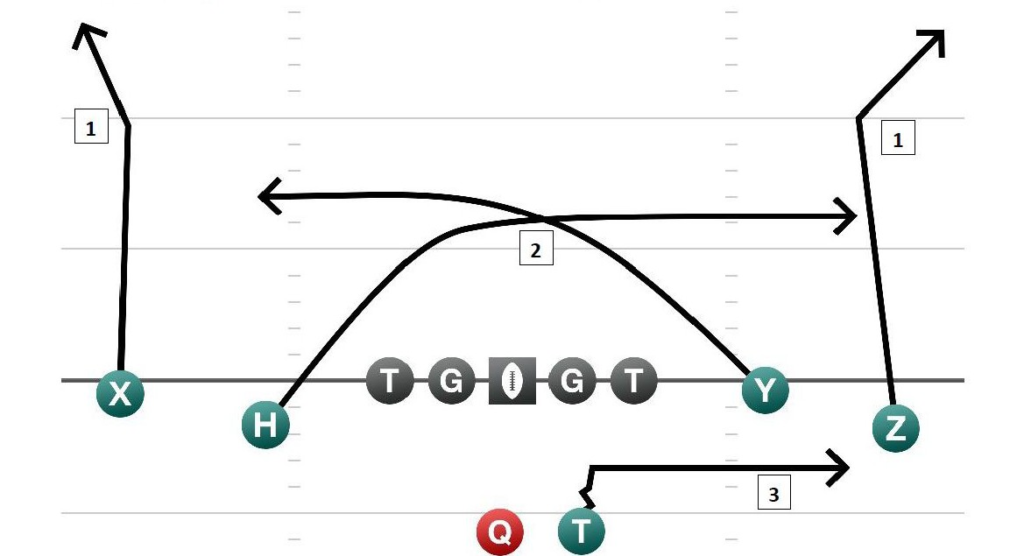
At its core, the mesh concept features two receivers crossing over the middle of the field at shallow depths—typically 4–6 yards—creating a natural “rub” or traffic situation for defenders in man coverage.
A standard mesh includes:
- Two shallow crossers (from opposite sides)
- A sit route or hook over the ball
- A vertical or corner route to stretch the defense
- A checkdown (usually the running back)
This combination creates both horizontal stretch and built-in answers versus multiple coverages.
Why Mesh Works So Well
Mesh thrives because it forces defenders into difficult decisions:
- Man Coverage Conflict
Defenders must navigate traffic, often getting picked or delayed. - Zone Coverage Stress
Crossing routes settle into open windows, especially against spot-dropping defenses. - YAC Opportunities
Receivers catch the ball in stride with space to run.
Quarterback Read Progression
A simple way to teach mesh reads:
- Pre-Snap
- Identify man vs zone indicators
- Locate leverage on linebackers and safeties
- Post-Snap
- Read the first crosser (usually from the QB’s dominant side)
- If covered, move to the second crosser
- Then check the sit route over the middle
- Finally, work to the checkdown
💡 Coaching Tip: Versus man, expect one crosser to come open. Versus zone, look for receivers settling in space.
Coaching the Mesh Point
The success of the play depends on the timing and spacing of the crossers.
Key details:
- Cross at no more than 1 yard apart
- We practice slapping hands on the mesh point every day in practice to ingrain the mesh point. Both mesh runners slap with their left hand so there are never any collisions.
- Stay flat—don’t drift upfield
- Maintain speed (no slowing down before the catch)
If receivers drift or mistime the cross, the play loses its effectiveness.
Adjustments vs Coverage
Vs Man Coverage
- Expect a “rub” effect—hit the open crosser quickly
- Encourage receivers to keep running after the catch
Vs Zone Coverage
- Crossers should find soft spots and sit if needed
- The sit route becomes a primary option
Vs Blitz
- Mesh is a great blitz answer
- Quick throws neutralize pressure
When to Call Mesh
Mesh is especially effective:
- On 3rd-and-medium (3–6 yards)
- Against man-heavy teams
- As a tempo or rhythm play
- In two-minute situations
Common Mistakes
- Crossers getting too deep
- Poor timing at the mesh point
- QB locking onto one receiver
- No vertical threat to stretch the defense
Final Thoughts
If you could only carry a handful of passing concepts, mesh should be one of them. It’s simple to install, adaptable at every level, and consistently produces results.
At its best, mesh embodies what great passing offenses do: create space, simplify reads, and let athletes make plays.
